
Auschwitz-Birkenau
Also known as Auschwitz II, Auschwitz-Birkenau was the largest camp in the Auschwitz complex of camps and the largest of the Nazi killing centers.
Beginning in the spring of 1942, transports of Jews from throughout Nazi-occupied Europe arrived daily in Auschwitz-Birkenau. Those deemed incapable of work were murdered immediately upon arrival in one of the camp's four gas chambers and crematoria. The use of Zyklon B gas as a means of mass murder was developed at Auschwitz (as opposed to carbon monoxide gas used in the killing centers at Chelmno, Belzec, Sobibor and Treblinka).
Between 1942-1944, over one million Jews and tens of thousands of others were killed in Auschwitz-Birkenau. In the peak phase of killing operations during the deportation of Jews from Hungary in the spring of 1944, as many as 6,000 people were gassed here in a day.
In an attempt to disguise the primary purpose of Auschwitz-Birkenau, the crematoria and gas chambers were destroyed in November 1944, but the camp continued to operate as a concentration camp. The majority of prisoners were evacuated by way of forced death marches into the interior of the Reich in advance of the camp's liberation by the Soviets on January 27, 1945.
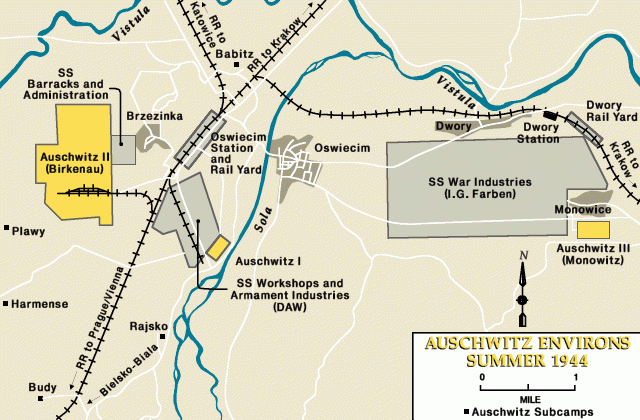
Plan of main Auschwitz camp complex, Summer 1944. Birkenau is indicated in yellow.
United States Holocaust Memorial Museum

Plan of Auschwitz-Birkenau camp, Summer 1944
United States Holocaust Memorial Museum

