
1. An only child in Prešov
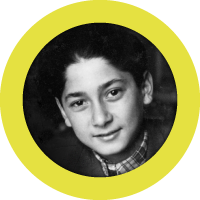
Oscar Sladek
Oscar Sladek’s parents, Sarlota and Bedrich Štaub, grew up in different cities in the eastern Slovakian region of the Austro-Hungarian Empire. Bedrich, called Frici, was from Prešov, and Sarlota, called Irene, from Sobrance. The region of eastern Slovakia encompassed a wide variety of ethnic groups: Slovaks, Germans, Hungarians, and a small population of Jews. When Austria-Hungary was broken up following the First World War, both Sobrance and Prešov became a part of the newly formed country of Czechoslovakia. Frici and Irene met when they both happened to be visiting the town of Kassa. Frici, a composer, violinist, and conductor with the Prešov Chamber Orchestra, was enchanted by Irene’s beauty, and traveled to Sobrance every few weeks to see her. There, he played his violin beneath Irene’s window, hoping she would invite him in. He won her heart with music and charm, and she agreed to marry him. After their wedding in 1933, the couple settled in Prešov. Soon thereafter, in March 1935, they welcomed their first child, a boy they named Oskar.
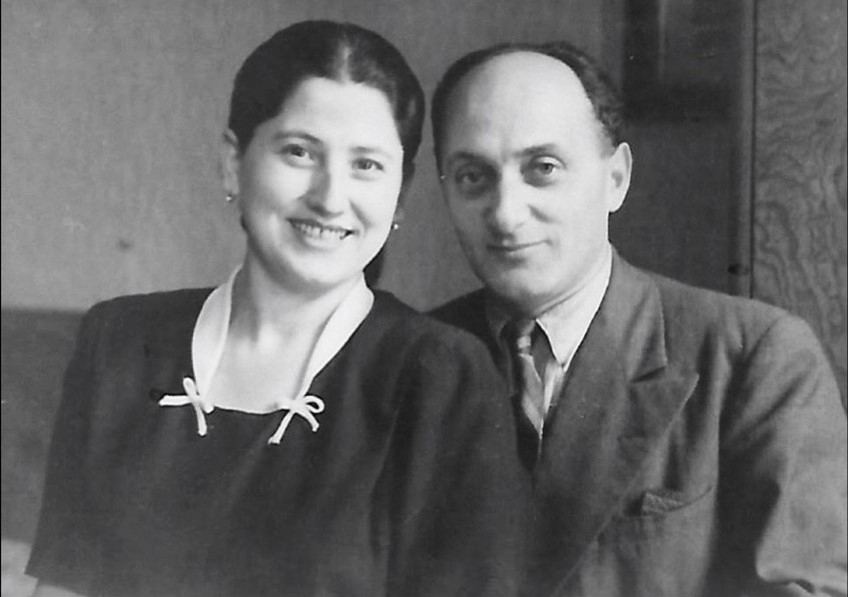
Oscar’s parents, Sarlota ‘Irene’ and Bedrich ‘Frici’ Štaub, in Prešov (1945)
Courtesy of Oscar Sladek
Oskar Štaub--today Oscar Sladek--is born into a Europe that is rapidly changing. The democracies of the interwar period are increasingly turning towards authoritarianism, and nationalism is on the rise. In Germany, Adolf Hitler has come to power as the leader of Germany’s Nazi party. Antisemitism—framed in economic, political, and racial contexts—is increasingly common. In eastern Slovakia, the virulently racist antisemitism that Hitler’s regime would spread has yet to take hold, but long before Hitler’s emergence there is evidence of antisemitism in largely Catholic Slovakia. For example, in the fifteenth century Jewish merchants were banned from settling in the city of Prešov to ensure they could not compete with local businesses. It was not until the late eighteenth century that the ban was lifted. Despite this history of discrimination—which was not uncommon in Central and Eastern Europe—Jews in Slovakia in the early 1900s lived in relative freedom: they were able to practice their religion and had equal political rights with their non-Jewish neighbors. Jewish communities could be found in urban centers and in rural areas; Slovak Jews spoke Slovak, German, Hungarian, or Yiddish—or all of these languages—and engaged in a variety of trades and professions. According to a 1930 census, there were 136,737 Jewish persons living in Slovakia. And in 1928, a museum documenting the history of Slovak Jews was even opened in Prešov.
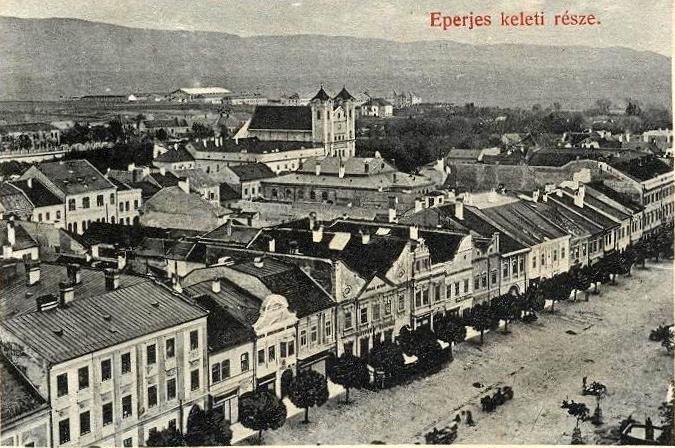
Postcard of Prešov with text (in Hungarian) that reads ‘Eastern part of Prešov’ (c. 1920)

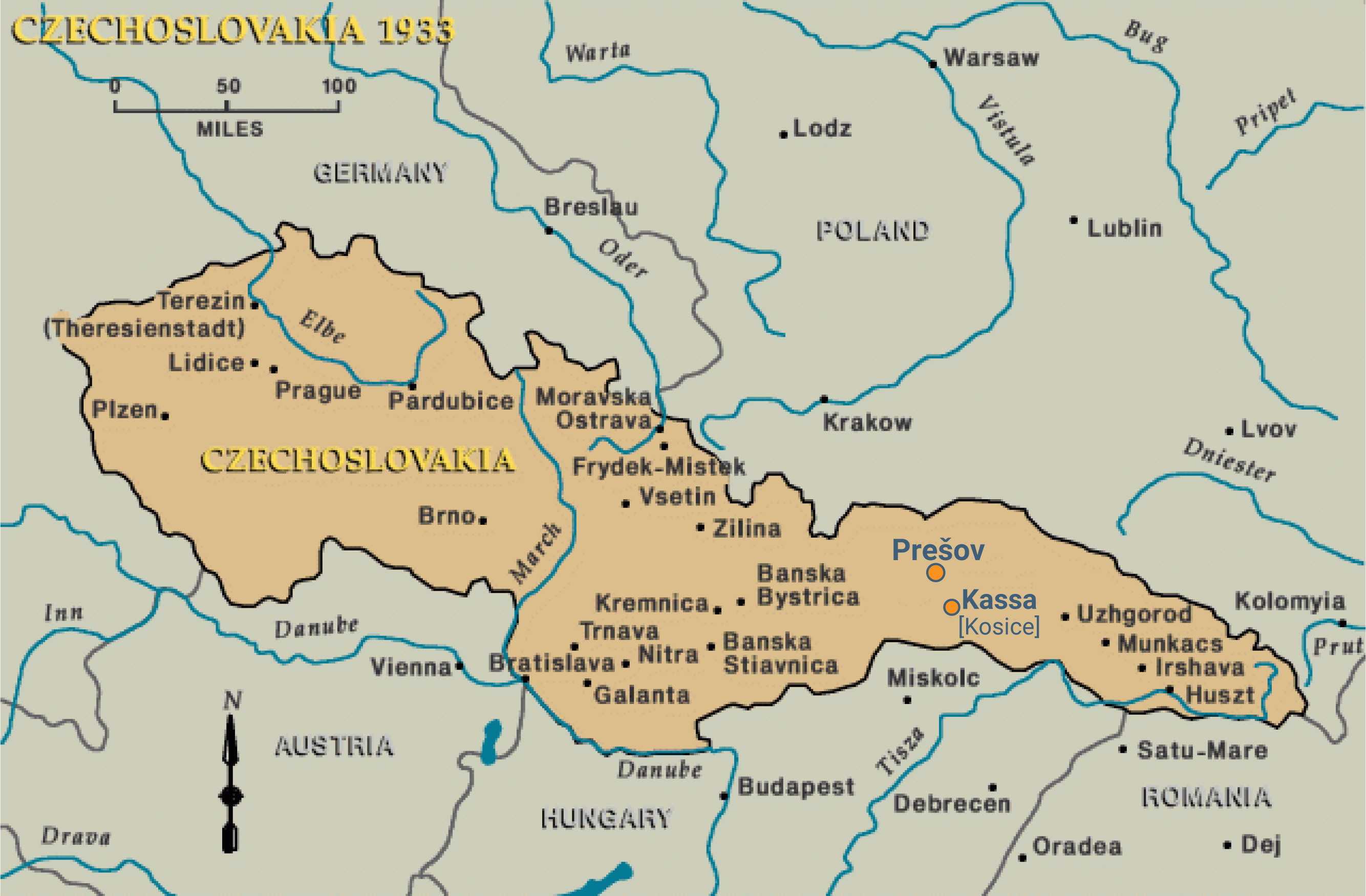
Czechoslovakia in 1933, Prešov and Kassa indicated
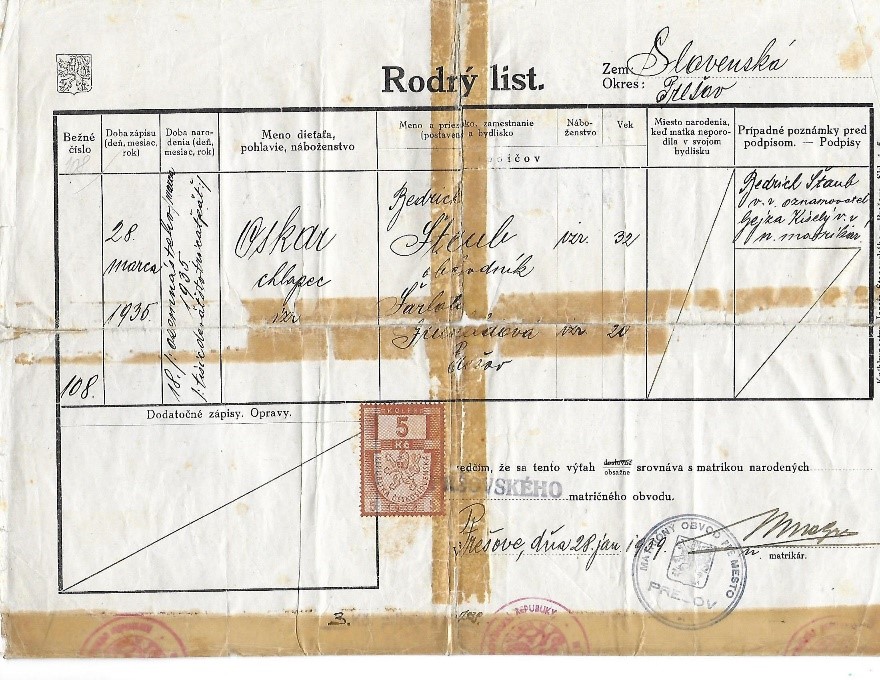
Oscar's birth certificate. Under his birth name Oskar Štaub, the document indicates “chlapec izr”: Israelite boy.
Courtesy of Oscar Sladek
Oscar’s early memories paint a picture of a happy family and a little boy who is the apple of his parents’ eyes. He enjoys playing with the toys his parents—whom he calls Anyu and Apu—bring him from their store. The store also stocks luxury goods like musical instruments, records, record players, and imported leather items. When Oscar visits the store, he loves to listen to the music his father plays on one of the store's record players: including many of Bedrich's own popular compositions. Irene often takes Oscar to watch his father perform in a band, and young Oscar is entranced by music from an early age. He tries to imitate his father by playing an imaginary trumpet, drumming beats on pretend instruments, and inventing melodies.
Because of the variety of ethnicities within Czechoslovakia, Oscar is exposed to many different languages from a young age. German is his first language through his nanny. From his grandparents, he learns Hungarian and Yiddish, and he learns Slovak from his parents and at school.
The record of Oscar’s birth in the Prešov city archives reads “Oskar Štaub-IZR.” The IZR in Slovak government records stands for "Israelite," indicating Oscar’s religious affiliation. Although this designation didn’t impact the day-to-day lives of Jewish Slovaks in 1935, the IZR classification would pave the way for identifying members of the Jewish community for persecution in the coming years.
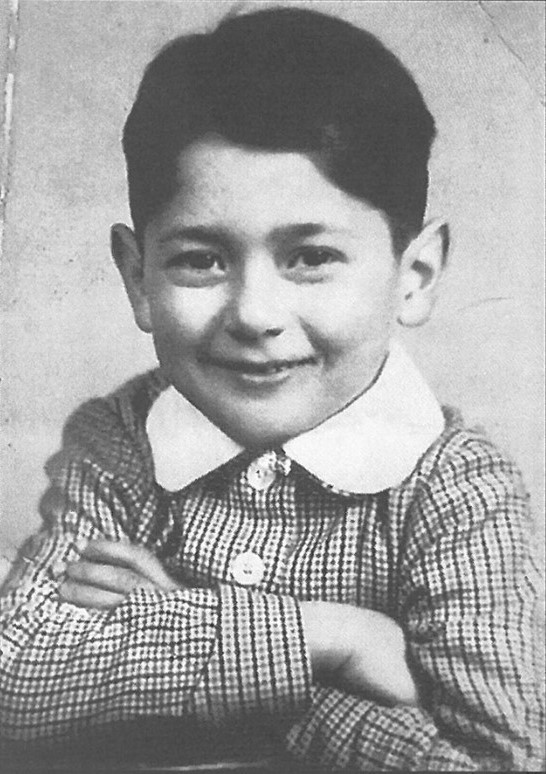
Oskar Štaub (1938)
Courtesy of Oscar Sladek
“Ej, Anička biela ruža!” Music by Bedrich Štaub. Lyrics by Bedrich Štaub, Otto Kaušitz & Janko Pelikán. Performed by František Krištof Veselý (1938)
SUPRAPHON a.s.
By the time Oscar starts school in 1941, the politics of his home country have changed. Czechoslovakia has been partitioned and no longer exists. He now lives in Slovensko or the Slovak Republic. Following elections in 1938, the new Slovak government under the leadership of Jozef Tiso has turned from democracy to Catholic nationalism and fascism, functioning effectively as a client state of Nazi Germany.
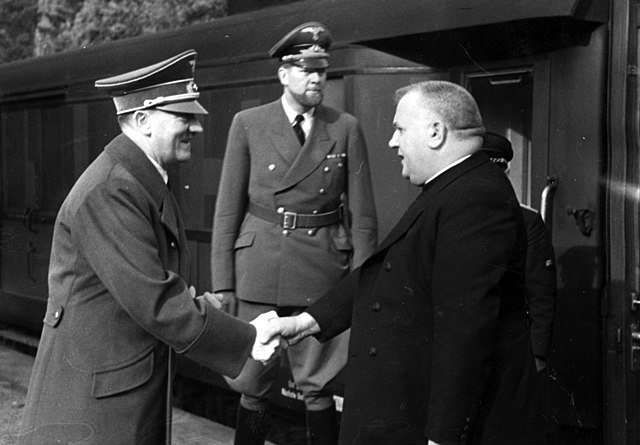
Slovak President Jozef Tiso greeting Adolf Hitler (October 1941)
Narodowe Archiwum Cyfrowe, Sygnatura: 2-12457. Courtesy of Wikimedia Commons
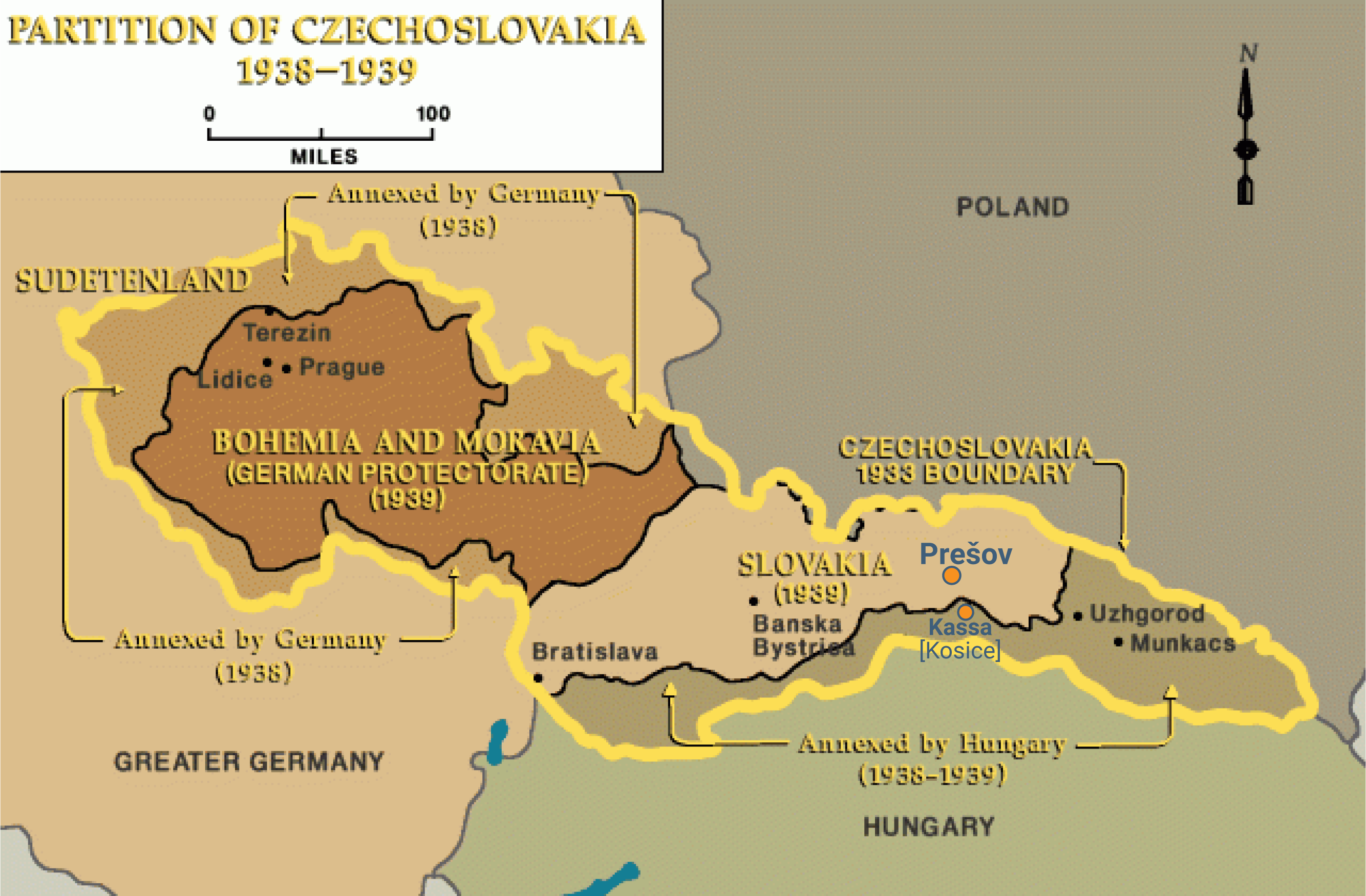
Partition of Czechoslovakia, 1938–1939; Prešov and Kassa indicated
On their family radio in 1939, Oscar hears the announcer talk about the German army marching on Prague. He also hears his parents discussing Hitler and his hatred for the Jewish people. Gradually, the influence of many of the antisemitic and fascist beliefs of Hitler’s government, the National Socialist Worker’s Party, begin to make their way into Oscar’s everyday life in Prešov, as the new Slovak government curtails democratic freedoms and pursues an anti-Jewish agenda.
Oscar Sladek's Timeline
-
Czechoslovakia formed
Czechoslovakia is founded after the dissolution of the Austro-Hungarian Empire at the end of World War I. The country comprises the Czech provinces of Bohemia and Moravia, Slovakia, Subcarpathian Rus [today part of Ukraine known as Transcarpathia] and parts of the Austrian region of Silesia, and is home to a variety of ethnic groups including Czechs, Germans, Hungarians, and Slovaks.

-
Oscar Sladek is born in Prešov, Czechoslovakia
Frici and Irene Štaub welcome their first son, Oskar. Later, the family will change their last name to Sladek, and Oskar will change the spelling of his name to Oscar. Oscar is born in the Slovak part of Czechoslovakia and belongs to a Slovak Jewish population that numbers over 136,000 in 1930.
-
Hungary passes three ‘Jewish Laws’
The first of three Jewish Laws establishes quotas restricting the number of Jews permitted to work in certain white-collar professions and business sectors. The second, passed a year later on May 5, 1939 defines Jews racially based on their ancestry, restricts their voting rights, and further reduces the professional quotas established under the First Jewish Law in 1938. A third Jewish Law is enacted on August 8, 1941, banning marriages and sexual relations between Jews and non-Jews in Hungary.
-
Munich Agreement authorizes German annexation of Sudetenland
Great Britain, France, Germany and Italy conclude an agreement that allows Germany to annex the Sudetenland, a largely German-speaking region then part of Czechoslovakia, in exchange for a peace pledge. British Prime Minister Neville Chamberlain hails the Munich Agreement as an achievement of "peace in our time" but he is criticized for a policy of appeasement. Nazi troops occupy Sudetenland on October 1, and the democratically-elected Czechoslovakian government, which was not party to the negotiation, resigns.
-
Hlinka Guard established
The paramilitary unit of the pro-Nazi Slovak People’s Party (HSLS), named after Slovak nationalist Andrej Hlinka. The group supported the right-wing party’s goal of achieving Slovakian independence and, after the establishment of the Slovak Republic in 1939, the consolidation of authoritarian power in the new regime and the persecution and vilification of Jews, Czechs, and political opponents.
-
First Vienna Award redraws Czechoslovakian borders
In the wake of the Munich Agreement ceding the Sudetenland region of Czechoslovakia to Germany, the First Vienna Award provided for further territorial claims against Czechoslovakia. With support from Germany and Italy, Hungary is awarded territories along the southeastern border of Czechoslovakia that had been under Hungarian control prior to World War I.
-
Formation of Slovakia
Following the partition of Czechoslovakia, the independent Slovak Republic is established. Essentially a client state of Nazi Germany, the new Slovakian regime under Prime Minister Jozef Tiso immediately curtails democratic freedoms and pursues a decidedly anti-Jewish agenda.
-
Nazi occupation of Czech lands and partition of Czechoslovakia
In violation of the Munich Agreement, Nazi troops invade and occupy Czech territory, establishing the Protectorate of Bohemia and Moravia. Hungary annexes territory along the former southern border of Czechoslovakia, as well as Subcarpathian-Ruthenia [today Transcarpathia, part of Ukraine]; the Tesin District of Czech Silesia is annexed by Poland. Slovakia becomes an independent state.
-
Hungary, Romania, and Slovakia join the Axis alliance
Hungary, Romania, and Slovakia join with Nazi-allied forces: the Axis.
-
“The Jewish Codex” adopted in Slovak Republic
The Slovak government adopts “The Jewish Codex,” a comprehensive packet of anti-Jewish laws among the strictest such measures to be found in any European country. The 270 paragraphs of the Codex include measures to define the term “Jew” based on strictly racial criteria, ban Jews from membership in organizations of any kind, require the wearing of a Jewish badge, curtail Jewish citizens’ ability to own businesses, property, or bank accounts. The combined effect of the Jewish Codex is the complete exclusion of Jews from public life in Slovakia.
-
First deportation of Slovak Jews
The first transport of Slovak Jews—consisting of 1000 women and girls—is deported to concentration camps in German-occupied Poland. The Slovak government has agreed to pay Nazi Germany a fee of 500 Reichsmarks for every Jew deported from Slovakia, ostensibly to cover the cost of resettlement and retraining. Some 57,000 Slovak Jews are gathered into labor camps within Slovakia and, over the next seven months, deported to concentration camps in German-occupied Poland.
-
Oscar Sladek is sent to Kassa, Hungary
The Štaubs have been able to avoid the deportations of 1942 by hiding during roundups. Now, after a brief reprieve during which deportations were halted, the government is threatening to resume the transports. Irene has a sister living in Kassa, Hungary, just 20 miles away from Prešov. The situation seems much safer on the Hungarian side, so Irene and Frici Štaub hire a smuggler to take Oscar across the border to live with Irene's sister's family.
-
Deportation transports from Slovakia halted
Since March 25, 1942, Slovakia has deported more than 57,000 Jews, delivering them into German custody in Nazi-occupied Poland. As reports that deported Jews are being murdered by the Nazis reach the Slovakian government, President Jozef Tiso, who is an ordained Catholic priest, comes under pressure from the Vatican and other Church officials. Tiso orders deportations of Slovak Jews to camps in German-occupied Poland to cease.
-
Jewish population of Slovakia is estimated to be c. 20,000
The number of Jews living in Slovakia, estimated to have been c. 89,000 in 1940, has been reduced to around 20,000 at the beginning of 1943. More than 57,000 Slovak Jews were deported between May-October 1942; most of them have perished. Of those remaining in Slovakia, some 2,500 are interned in the three major labor camps: Sered, Nováky, and Vyhne. Some 6,000 more have fled to Hungary, the only country under Nazi influence not yet deporting Jews. Many others are in hiding or living under false identities.
-
Report to US State Department confirms systematic murder of Jews
A report from the American Legation in Switzerland to the US State Department with the title “Confirming Reports of Mass Executions of Jews in Poland” describes the systematic deprivation and murder of Jews across Europe and specifically in ghettos and Nazi concentration camps in Poland, adding to growing evidence of Nazi atrocities against the Jewish populations of occupied Europe.
-
Nazi surrender at Stalingrad
After months of bitter fighting, the Soviet army is finally able to surround and trap German forces besieging the city. Of the nearly 250,000 troops that attacked the city in August 1942, some 90,000 surrender to the Soviets. The German defeat in the Battle of Stalingrad marks a turning point in the war; Soviet forces will now advance and push the Axis to retreat.
-
Italy surrenders to Allies
Following the Allied invasion of Italy and the defeat of Italian operations in North Africa, Mussolini is replaced as prime minister by Marschall Pietro Badoglio, who formally surrenders to the Allies in early September. Northern Italy is quickly occupied by Germany.
-
Nazis occupy Hungary
Hungary, part of the Axis powers since 1940, wavers in its support of Hitler after Soviet successes on the battlefield. Concerned that Hungary is preparing to leave the Axis powers and join the Allies, Hitler orders Hungary’s occupation. Hungarian Regent Miklós Horthy is sidelined and a pro-Nazi government is appointed. Up to this point, Hungary has refused to deport its Jewish population.
-
Oscar Sladek returns to Prešov
Unable to convince his relatives in Hungary of the danger to Jews under Nazi occupation, Oscar demands to be sent back to his parents in Prešov. He travels with a smuggler organized by his parents.
-
Registration of Hungary's Jews
Nazi and Hungarian authorities begin to register the country's Jews, force them to wear an identification badge, confiscate propery and businesses, and soon isolate them in ghettos.
-
Deportations of Hungarian Jews to Auschwitz-Birkenau begin
Beginning 15 May, Nazi forces and Hungarian collaborators systematically round-up and deport c. 440,000 Jews within two months. Most are murdered on arrival in Auschwitz-Birkenau; some 110,000 are assigned to forced labor.
-
Oscar Sladek and his family leave Prešov for Mikuláš
Supplied with false papers by their friend the judge, the Štaubs have been living under assumed Christian identity in Prešov. Fearing they will be recognized as Jews, they decide to leave Prešov for a new location: Mikuláš [Liptovský Mikuláš] is located in the mountainous region of northern Slovakia.
-
Russia advances westward in Subcarpathian Rus
During the summer of 1944, Russian forces move up through Subcarpathian Rus towards Slovakia’s eastern border. The Russian advance is an important factor precipitating the Slovak uprising in August, leading to Germany's subsequent occupation of Slovakia.
-
Einsatzgruppe H active in Slovakia
Einsatzgruppe H is a special task force of the SS with the express purpose of implementing the Final Solution in Slovakia and suppressing resistance to Nazi occupation. With the occupation of Slovakia, the Nazis prioritize the elimination of the Jewish population. Working with local collaborators such as the Hlinka Guard, Einsatzgruppe H systematically hunt down Jews and partisans, as well as anyone suspected of aiding either. Those found are either killed on the spot or deported.
-
Germany occupies Slovakia
In response to a partisan uprising, Germany enters and occupies Slovakia. Encouraged by the Allied invasion of Normandy and news that Soviet troops are advancing towards Slovakia, the underground Slovak resistance movement revolts against the Tiso regime and the influence of the Nazis. As many as 80,000 fighters from the Slovak military, partisan groups, and foreign volunteers join forces in the Slovak National Uprising. After the organized rebellion is quashed by Nazi occupying forces in late October, partisan fighters retreat but continue resistance using guerilla tactics.
-
The Štaubs leave Mikuláš for Bobrovček
Nazi forces advance into Slovakia and begin to encircle Mikulas. Partisan forces in the city retreat, and Oscar and his family move to the village of Bobrovček, where the partisans have established a base.
-
Deportation of Slovak Jews under Nazi occupation
Under German occupation the deportation of Slovak Jews resumes. Between September and December 1944, approximately 12,600 Jews are transported to concentration camps, bringing the total of deported Slovak Jews to c. 70,000.
-
Soviet Army enters Slovakia
From early September 1944, the Soviets and Germans are fighting along the Polish-Slovak border in the Carpathian Mountains. The Soviets gain control of Slovak territory near Svidnik in early October. Simultaneously, the Soviets were pushing upward through Hungary along the southeastern border of Slovakia. By November, eastern Slovakia is under Soviet control.
-
Oscar Sladek and his family flee into the Tatras
As the Nazis are about to take control of the village of Bobrovcek, the Štaubs flee on foot into the Tatra mountains, along with other Jews, partisans, and others. They take shelter in a primitive cabin they must share with 12 other people.
-
Publication of Auschwitz Report
The War Refugee Board publishes the 40-page report “German Extermination Camps – Auschwitz and Birkenau,” based on first-person testimony from four Slovakian Jewish men who had escaped from Auschwitz in spring 1944. Known as the 'Auschwitz Report,' the document contains for the first time estimates of the numbers of Jews being murdered in the camp as well as details of camp operations, including the gas chambers. One of the eyewitness accounts reported is from Irene Štaub’s second cousin, Arnost Rozin.
-
German and Soviet forces battle for control of Liptovský Mikuláš, Slovakia
In early February, Soviet forces take control of villages to the east and south of the strategically important town. Mikuláš itself is the site of prolonged fighting between the advancing Soviet army and German forces ordered to hold the position. The Germans begin pulling out of the town in March, and by March 27 Mikuláš is under Soviet control. During this time, Oscar Sladek and his family are in hiding in the nearby Tatra mountains.
-
Oscar Sladek and his family reach Soviet lines and freedom
With the help of partisan fighters, the Štaubs and the other families with whom they have been sharing their hideout in the Tatras make their way down the mountain to Soviet lines. In the town of Žiar, they are provided with warm food and shelter for the first time in months.
-
Soviet forces capture Bratislava
With the liberation of the Slovak capitol Nazi control of Slovakia is ended and Tiso’s collaborationist regime is toppled. German forces withdraw into Austria rather than defend the city, which becomes a gateway for the Soviet advance into Austria and southern Germany.
-
Provisional Czechoslovak government formed in Košice
Under Soviet control since January, the city of Košice becomes the seat of a provisional Czechoslovak government. The Košice Government Program restores the state of Czechoslovakia, aligning it politically and economically with the Soviet Union. Territory ceded to Hungary is restored, so that Košice becomes, once again, part of Czechoslovakia.
-
Unconditional surrender of Nazi Germany
Nazi Germany's High Command unconditionally surrenders on 7 May to the Allies and 9 May to the Soviets. May 8 is proclaimed "Victory in Europe Day."
-
Communists seize power in Czechoslovakia
Under the Soviet sphere of influence since its liberation in 1945, post-war Czechoslovakia initially operated as a democracy, but gradually, key government ministries came under communist control, culminating in a communist takeover of the government in early 1948. Among other reforms, the new communist regime collectivizes businesses and initiates a campaign against all organized religion—part of a larger plan to limit basic civil, labor, and personal liberties.
-
Oscar Sladek celebrates his bar mitzvah
Just days before his thirteenth birthday, Oscar celebrates his bar mitzvah in Košice. Many of his relatives are missing, having perished during the war.
-
State of Israel established
Per the United Nations resolution of November 1947 for the partition of Mandate Palestine, the British mandate comes to an end on May 14, 1948. In Tel Aviv, Jewish leader David Ben-Gurion proclaims the State of Israel, which will be a haven for those Jews made homeless by the Holocaust.
-
Oscar Sladek’s sister Miriam is born
Frici and Irene welcome their long-awaited second child, a daughter and a younger sister to Oscar.
-
Oscar Sladek and his family arrive in Israel
The Sladeks arrive in the harbor of Haifa on Israeli Independence Day—exactly one year after the establishment of the State of Israel in 1948.
-
Suez Crisis
Also known as the Second Arab-Israeli War. After Egypt nationalizes the British- and French-owned Suez Canal Company, Great Britain and France respond to the threat to their economic interests with a joint attack on Egypt in coordination with Israel. Israel seeks to regain access to the waterway lost due to an Egyptian blockade since the First Arab-Israeli War. A UN resolution on November 6 brings about a ceasefire. Egypt is able to maintain control of the Canal and Israel secures its shipping rights, but the crisis marks the end of Britain and French influence in the Middle East.
-
Oscar Sladek immigrates to Venezuela
Following his military service in Israel, Oscar moves to Caracas, Venezuela to pursue a musical career. One year later, a coup in Venezuela forces him to leave the country.
-
Oscar Sladek moves from Caracas to Los Angeles
Civil unrest in the wake of the collapse of the Venezuelan government in November 1958 forces Oscar to leave Caracas. He decides to pursue his career as a musician and entertainer in the United States, settling in Los Angeles.
-
Oscar and Selma Sladek settle in Denver
Oscar meets his wife Selma in Los Angeles. Following their marriage, the couple decide to settle in Selma’s hometown of Denver.
-
Oscar Sladek's Contributions Recognized
Honoring Oscar’s work as an educator and speaker on the Holocaust, this award recognizing his “commitment to inspire understanding, moral courage and social responsibility” is presented to him by Colorado Governor Jared Polis at the Mizel Institute Annual Dinner.
-
Slovakia issues apology
On the 80th anniversary of the adoption of the 1941 Jewish Codex, Slovakia issues a formal apology for the persecution of Slovak Jews through anti-Jewish laws and its role in the murder of Slovak Jews during World War II.
-
Oscar is inducted into the Colorado Authors Hall of Fame
Following the publication of his memoir, "Escape to the Tatras," Oscar’s accomplishments are recognized with his induction into the Colorado Authors Hall of Fame.