
Old dreams, new lessons

Barbara Bandler Steinmetz
Barbara and her sister spend the summer of 1946 at another Jewish camp. While they are away, their father receives a promising job offer to work at a restaurant in Arverne, a modest beachfront community in New York City’s borough of Queens. The Bandlers decide to leave Boston in search of more stable employment. In Arverne, the Bandlers rent another one-room apartment and settle in. Margit, who continues to struggle with English, helps make ends meet working as a house cleaner. Barbara remembers these difficult times and remains in awe of her mother’s dignity: “My mother would say, ‘Every job is important. Every job done well is important.’ And she was the best toilet cleaner anywhere!” The lesson of a job well done is one Barbara has passed on to her own children. “When someone says a ‘menial job,’ I say there is no menial job,” Barbara offers, “every job is important, and the important thing is to do the job well.”
The deprivations of life in a one-room apartment cannot quash Alexander’s dreams. Though he is self-educated, Alexander encourages Barbara and Ann to pursue formal studies. He also primes them to draw inspiration from art and music. “Culture and music are your life,” Barbara remembers him repeating. One day, Alexander comes home from a long day at the restaurant holding tickets for the Metropolitan Opera. The Bandlers all attend the evening performance dressed in second-hand clothes because Alexander insists that they have come to the U.S. for freedom, and “they can go to the opera if they want to,” no matter what they are wearing.
The fall of 1946 brings changes to the Bandler household. Barbara’s cousin, Panni [Anne] Bay, who has survived the Holocaust, makes her way to the U.S. at the age of 17. The Bandlers sponsor her immigration visa, knowing they must help despite their own hardships. The traumatized Panni moves into the cramped quarters of the Bandler’s apartment in Arverne as soon as she arrives. Barbara, Ann, and Panni sleep in one bed; Alexander and Margit in another.
The Bandlers learn that Panni’s mother Vilma, a seamstress, was shot by the Nazis during a roundup near Budapest. Panni tells her relatives the chilling story of sneaking through the streets to turn over corpses to look for her missing mother.
Somehow, despite their poverty, Margit manages to scrape together enough money to buy Panni a special present for her 18th birthday: a brand new, green sweater. “We were all wearing hand-me-downs,” Barbara explains, so the miraculous gift of a new article of clothing leaves the family crying with emotion. Panni will remain devoted to the Bandlers and lives with them for many years, until she marries another survivor and starts her own family.
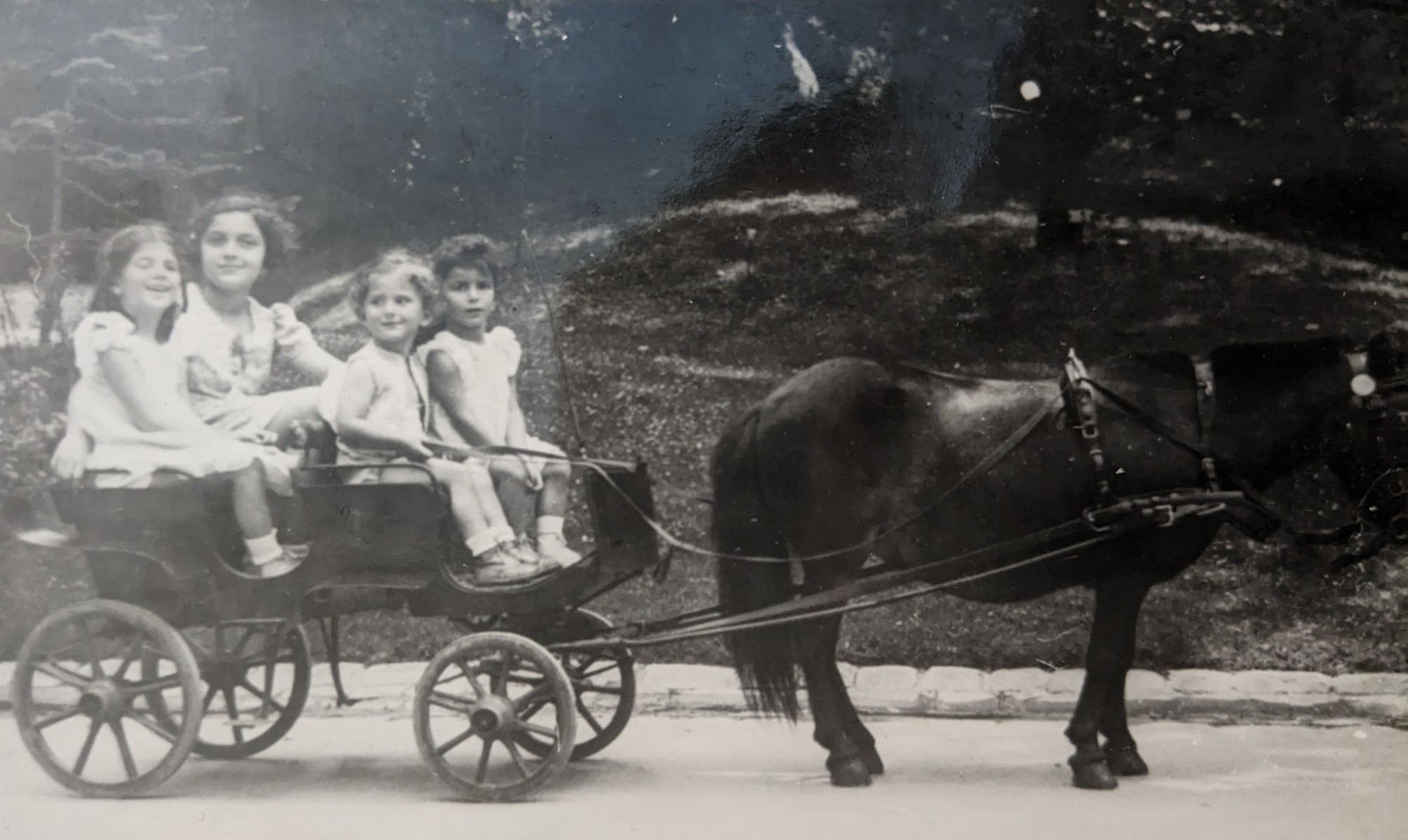
(l-r): Ann, cousin Panni, Barbara and cousin Imre in the Budapest Zoo in June, 1939.
Courtesy of Barbara Bandler Steinmetz
Transcript
Barbara: Anyway, going back to New York, we found that my cousin-- my cousin Panni and my cousin Oscar were alive and-- and my-- that they were the children of my uncle that already lived here in this country. And he was in no position to take care of them. My cousin was under 18, and she was able to come to this country right after the war. But she had no place to go. So she came to live with us. We lived in this tiny, little furnished place. And my cousin came to live with us. The-- she had suffered a great deal during the war. She'd lost her mother.
Her brother wasn't around. Her father wasn't around. She kind of was pushed from place to place. She really-- she suffered a great deal. When she came to live with us, she had nothing. She had not-- she had not known any kind of safe harbor for the-- for many years. Her birthday's on November 6, and she came to live with us sometime in September or October. Now November 6, my mother made a birthday cake for her, [PAUSES FOR 5 SECONDS] and went out and bought her a brand new sweater. She hadn't had anything new. [PAUSES FOR 3 SECONDS] She hadn't had anything in so many years. [PAUSES FOR 3 SECONDS] And it impacted us all. [PAUSES FOR 3 SECONDS] Anyway, she came here at 17, and she had not been at school. And of course, coming to this country, she couldn't go to school, because she had to go to work. And so she was under 17. She was under 18, and she started working. She knew how to sew, and she went to work in a bra factory. But she lived with us for many years. And she's still like an older sister to me. She's a-- a very special person. [PAUSES FOR 3 SECONDS]
In terms of our family in Hungary, when we found out who was alive, my father immediately-- my father and mother-- immediately started sending packages to Hungary. And those packages kept them alive. Because after the war, they had nothing. And so my parents, with the little money that they earned-- remember, we were living in a furnished apartment with all of our clothing from the welfare federation. But my parents took all the money that they had, and they bought cocoa. And they bought coffee. And they bought nylons-- anything that the family in Europe could sell-- not to use themselves, but to sell-- and use the money for whatever. And I can remember being-- I don't know, maybe nine, 10, 11 years old at the time-- those years-- saying to my parents that I wanted new clothes like the other girls in school. I mean, I looked like a refugee. And-- [PAUSES FOR 3 SECONDS] and my father said that, you know, that taking care of our family was the most important thing.
"When she came to live with us, she had nothing. She had not ... known any kind of safe harbor for ... many years."
USC Shoah Foundation Visual History Archive, Interview 38619
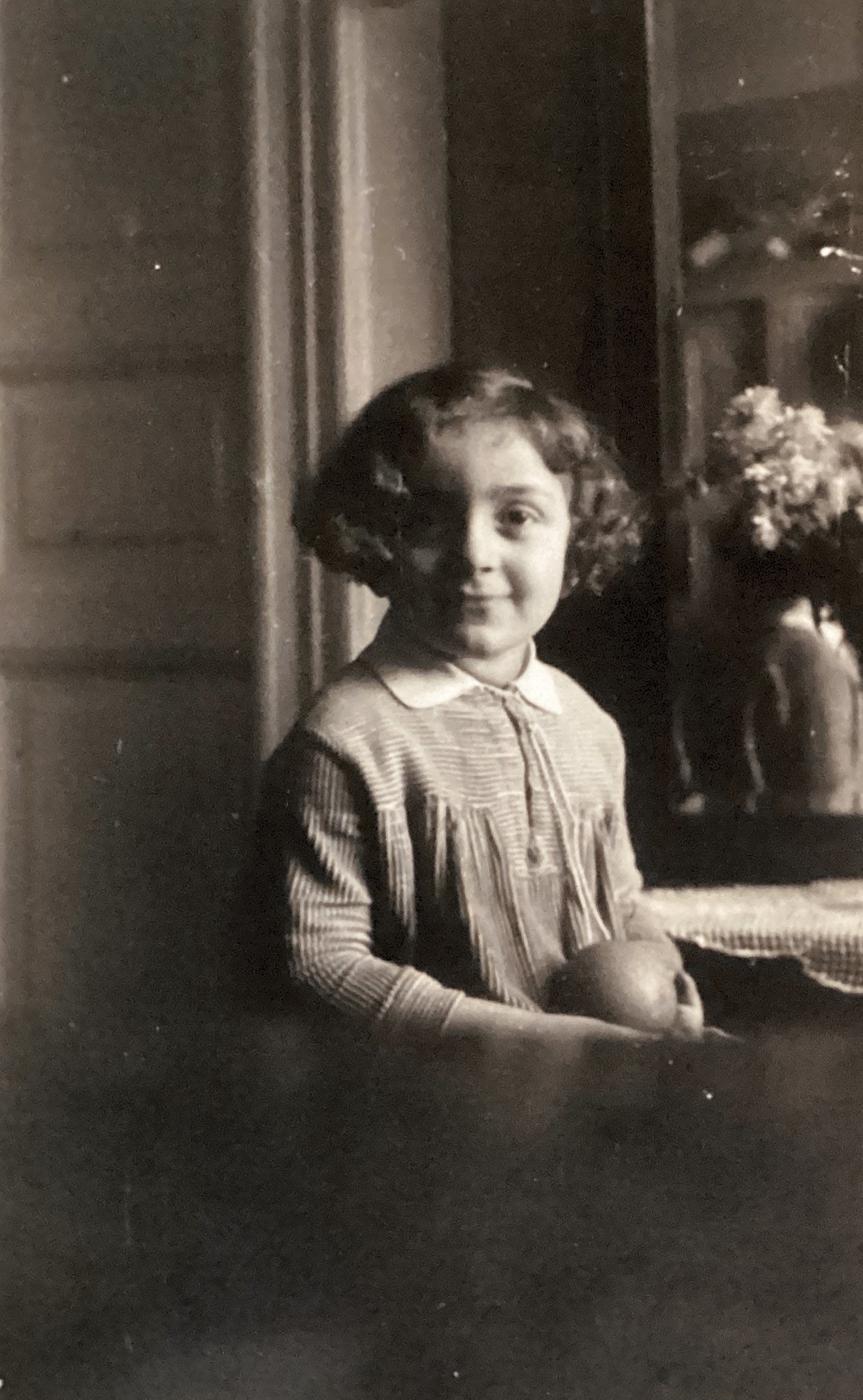
Barbara's cousin Panni in Budapest, mid-1930s
Courtesy of Barbara Bandler Steinmetz
Transcript
Barbara: Sometime during the year-- well, that-- the fall of the year that we moved to New York was the end of the war-- was--and-- and my-- we heard about our family in Europe. And we heard that, well, actually, it was the-- I'm sorry. I-- I have to go back. It was when we were living in Boston. That was 1945. That was when we heard about our family in Europe. And the first telegram that we received was that our family in-- in Budapest, my father's brother and wife and son were alive, but that my mother's family, they didn't-- hadn't heard about anything about my mother's family. They lived in Győr. They didn't live in Budapest. We knew that the Jews from the outlying districts of Budapest were killed. They were all taken. And then we received-- the following telegram we received was that my grandmother had also died. And my-- but she died immediately after the war. She didn't die during the war. And I think she died of a brain hemorrhage. I-- I-- I can't remember. But-- but I remember my father was devastated by the news. And it was the only time I ever saw my father cry. But when he received the telegram, he-- he burst into tears. He just-- that his-- his family had been decimated. [PAUSES FOR 3 SECONDS] My mother's sister-- we subsequently learned that my mother's sister and niece and child were-- were also killed in Auschwitz.
Interviewer: What were their names?
Barbara: My mother's sister's name was Elizabeth-- Erzsebet Steiner-- Vamosi Steiner. And my cousin's name was Klari Steiner, and she-- she was married. And I can't remember what her married name was. And she had a child, and they were-- - they were killed. I think her husband was also killed.
Interviewer: Do you remember this news yourself?
Barbara: I don't remember the news. I remember my father-- I remember my father's total devastation. I'm gonna guess I-- my mother also was devastated, but it probably-- for a kid-- I was probably so impacted by my father breaking down. My father never broke down. And through all of the-- all the-- all our wanderings, he was the most determined man. He was-- he was a man that found out all the facts, and then he just pushed forward no matter what.
He didn't-- he didn't look back. He made a decision. And the decision was-- that was it. It was the best decision that he could make at the time, and he just forged forward. And you know, to see him break down, I must--for a kid, I must have been just shocked to see him break down and cry. I'd never-- I never perceived him to have any kind of softness about him. He was a tough man when it came to-- to everything-- when it came to educating us, when it came to disciplining us. He was very rigid in his disciplining. He had great expectations of his kids. We were to perform all the time. And there was no excuse for not performing. He always wanted us to function at our absolute max. And it was to preserve us. He-- I think that he knew that that's what-- that's what kept him alive--was to be a strong person and to be a determined person. And that's what he passed on to us.
"I don't remember the news. I remember my father--I remember my father's total devastation."
USC Shoah Foundation Visual History Archive, Interview 38619
Many of the Bandlers' relatives in Hungary did not survive the war; those who did suffered greatly. When Alexander Bandler learns of his family's fate, he is devastated and breaks down in tears. It is the first time in her life that Barbara has seen him cry.
After the war, anti-German sentiment is common and many Bandlers fear repercussions for their German-sounding name. In Hungary, Barbara's uncle Arpad Bandler changes his family name to the more Hungarian-sounding "Tahi," which comes from the village Tahitótfalu where the Bandler family originated. Today, Tahitótfalu is part of Budapest.
In the United States, Barbara's uncle Eugene Bandler and his daughter Panni adopt the family name "Bay" for similar reasons.
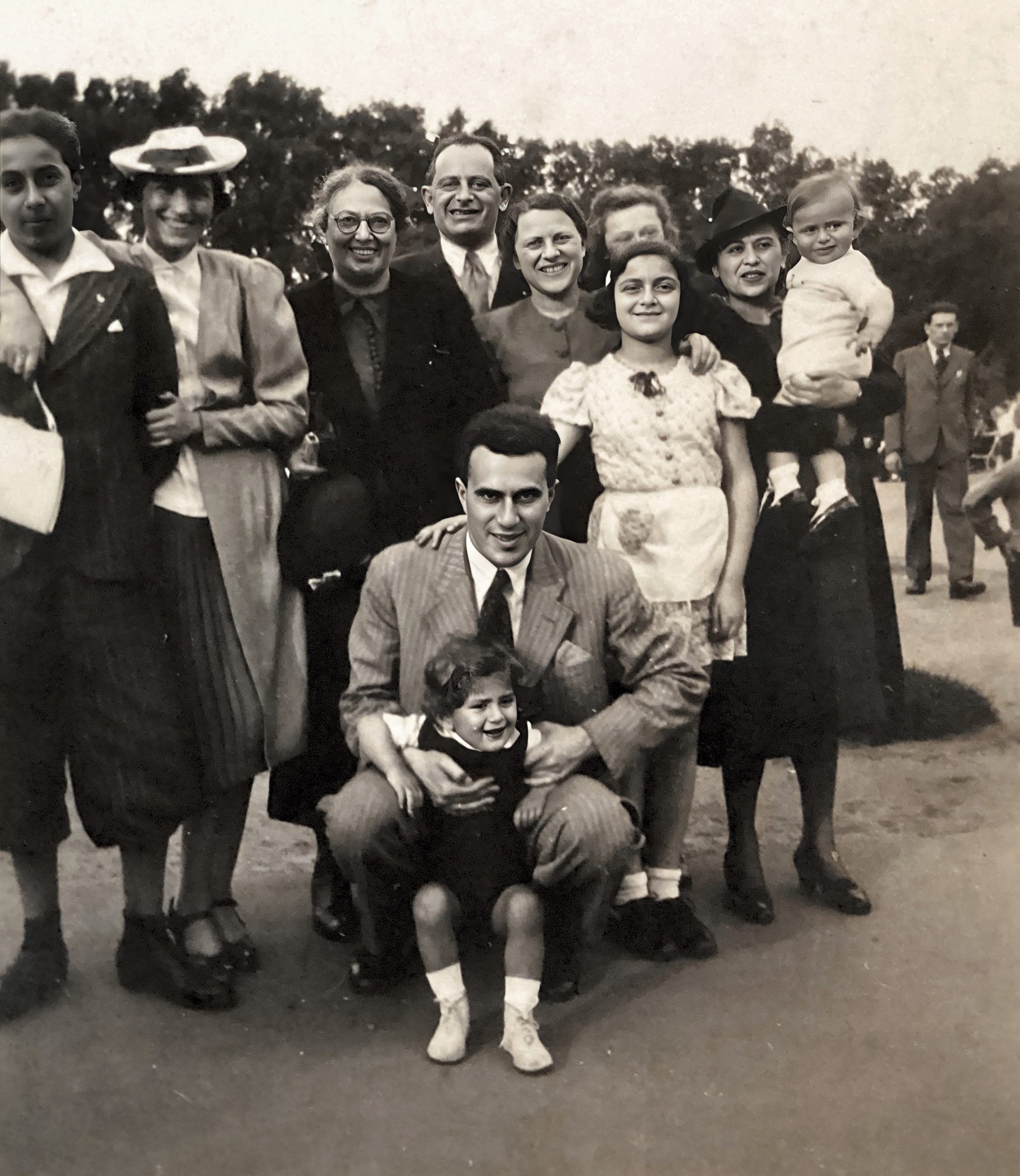
In the back on the left is Barbara's cousin Oscar Bandler Bay, third from left (wearing glasses) is Barbara's grandmother Frida Bing Bandler, who died during the war. To her right is Vilma Bandler, who was murdered in an 'Aktion' in Budapest, and her daughter Panni (in a white dress), and Manci Kraus (holding a baby). In front, Barbara's uncle Arpad Bandler Tahi with his son Imre. Budapest, c. 1938.
Courtesy of Barbara Bandler Steinmetz
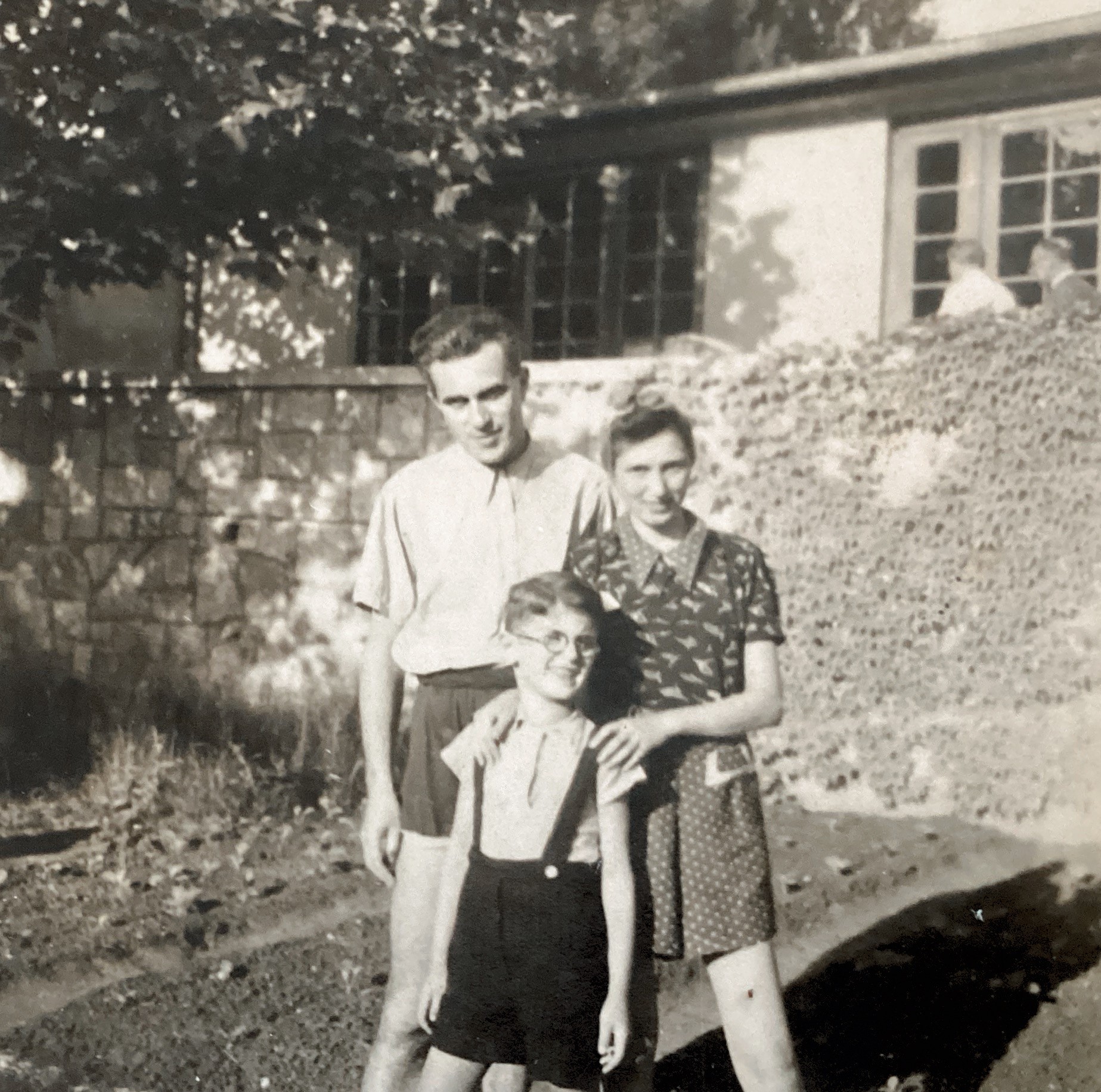
Barbara's uncle Arpad Bandler Tahi, his wife Bozsi, and their son Imre survived the war. Budapest, Summer 1945.
Courtesy of Barbara Bandler Steinmetz
Barbara Bandler Steinmetz' Timeline
-
Rome-Berlin Axis Agreement
Italy, under fascist dictator Benito Mussolini, concludes an alliance with Germany's Hitler. Mussolini later issues anti-Jewish legislation and enforces persecution of Italian Jewish community.

-
Barbara Bandler is born in Győr, Hungary
Her parents, Margit and Alexander Bandler, are Hungarian citizens but live in Italy, where Alexander owns a hotel on the Adriatic island of Lussinpiccolo, just off the coast of what is today Croatia. They return to Italy soon after Barbara’s birth
-
Publication of the “Race Manifesto” in Italy
Published anonymously but drawn up by a scholar with close ties to the Fascist government, the article outlines in ten clauses a theoretical framework for the concept of race in Fascist Italy, according to which Italians are essentially Aryan and Jews do not belong to the Italian race.
-
Italy adopts antisemitic laws
Italy adopts a series of antisemitic “Race Laws.” A September 5, 1938 law prohibits Jews from studying or teaching at Italian public schools and universities. A September 7, 1938 law retroactively annuls Italian citizenship granted to Jewish immigrants to Italy after 1919 and revokes permanent residency in Italy for foreign Jews, requiring them to leave the country within six months. Like the Nuremberg Race Laws and other Nazi legislation, additional laws prohibits marriage between Jews and “Aryans,” define who is Jewish, and require all Italian Jews to register, as well as placing restrictions on professional activities and business ownership.
-
Italy and Germany sign the “Pact of Steel”
Expanding on the alliance between the two countries since the Rome-Berlin Axis of October 1936, in the “Pact of Steel” (officially the Pact of Friendship and Alliance) Italy and Germany agree to military cooperation and mutual defense. Despite this agreement, Italy remains neutral during the first year of the war, only entering the war as Germany’s ally in June 1940.
-
Rafael Trujillo and the American Jewish Joint Distribution Committee sign an agreement
The document formalized the first wave of Jewish immigration to a 26,000 acre agricultural settlement in Sosúa, on the northern coast of Hispaniola. The New York City-based American Jewish Joint Distribution Committee set up a separate arm, the Dominican Republic Settlement Association (DORSA), to establish Sosúa as an agricultural community.
-
France formally surrenders to Nazi Germany
Much of France falls to Nazi domination. Parts of southern France are governed by a Nazi collaborator government headed by Marshal Henri Philippe Pétain, called the "Vichy" regime after its capital.
-
Vichy France enacts anti-Jewish legislation
The collaborationist Vichy government enacts a series of anti-Jewish laws in accordance with Nazi policy.
-
Germany orders closure of US diplomatic missions
After the US State Department orders the closure of German consulates in the United States because German diplomats are suspected of spying, Germany and Italy order all American consulates in Axis-occupied Europe to cease operation, closing the door for refugees fleeing Nazi persecution to apply for immigration to the United States.
-
Bandlers set sail for the Dominican Republic
Aboard the Portuguese ship Nyassa, the family sail for the Caribbean, making a stop at Ellis Island on the way.
-
DORSA establishes a hotel in Jarabacoa, Dominican Republic for new Jewish settlers
Disease, fatigue, poor sanitation, the brutal sun, and the emotional distress of dislocation all take their toll on the island’s new Jewish residents. DORSA organizers recognize the need to provide ailing refugees with a place to recuperate from their exertions, and ask Alexander and Margit Bandler to manage the refuge.
-
The Battle of the Caribbean
In an attempt to disrupt the Allied supply of oil and other material by targeting their points of origin in the Caribbean, German and Italian submarines torpedoed 263 ships in the Caribbean, including two Dominican ships. The S. S. Presidente Trujillo and the San Rafael, both named by the Dominican president after himself, were sunk, and 25 crew members were killed.
-
Allies denounce Nazi mass murder of Jews
Reports of the Nazi plan to murder all of the Jewish people in Europe begin to circulate in the second half of 1942 and are widely reported in U.S. newspapers in late November. On December 17 1942, the Allied governments denounce the mass murder of European Jews under Nazi control. Though Nazi crimes are now publicized, Allied forces do not target Nazi killing installations or prioritize the rescue of Jews.
-
Ads for Margit Bandler’s cosmetics company appear in American Jewish newspapers
Lori (Elenor) Mayer, one of Margit’s childhood friends who had immigrated to Boston in the mid-1930s, sees the advertisement in 1945, and sends a letter to Margit in Jarabacoa. Lori and her husband, Eugene, later secure work visas for the Bandlers to enter the U.S.
-
Nazis install new fascist government in Hungary
Nazis arrest Hungarian leader Miklos Horthy and install a new government under Ferenc Szalasi, leader of the fascist and radically antisemitic Arrow Cross Party.
-
Mass executions of Budapest Jews
Between December 1944 and January 1945, approximately 20,000 Jews from Budapest's ghetto are taken to the banks of the Danube, where they are murdered and their bodies thrown into the river.
-
Soviet forces liberate Budapest
After nearly two months, Soviet forces succeed in liberating Budapest from Nazi and Hungarian fascist control. Approximately 100,000 Jews survive, mostly thanks to protections offered by foreign diplomats such as Raoul Wallenberg.
-
Bandler family leaves the Dominican Republic for the U.S.
With little notice, Barbara boards a bus to Santo Domingo, then a plane to Miami, FL, then another bus to Boston, MA where she and her family begin their new American life.
-
Sosúa project dwindles
By the late 1940s, only 275 settlers remain in Sosúa, which had once been home to many hundreds more refugees. DORSA’s experiment under Trujillo never becomes a profitable agricultural settlement, though a successful dairy cooperative founded by Jewish immigrants flourishes there for decades.
-
Hungarian People's Republic established
Soviet forces had remained in Hungary after liberating the country from Nazi occupation in 1944. After the war, Hungary had held democratic elections, but under Soviet influence the Communists successively neutralized all other parties until, in 1949, voters were presented with ballots with only one party list. The newly elected Communist legislature adopted a new, Soviet-style constitution and became a Soviet satellite.
-
Barbara becomes a U.S. citizen
Just a few months before her 16th birthday, Barbara takes the oath to become a United States citizen.
-
Barbara Bandler graduates high school
She and her boyfriend, Howard Steinmetz, make plans to wed, but her father insists she complete her college education before marrying. The two reach an agreement, and Barbara and Howard are married in 1956, after Barbara is accepted to college.
-
Hungarian Revolution of 1956
Student demonstrations in Budapest calling for political and social reforms grow into a broad-based, nationwide popular uprising against the Soviet-backed government of the Hungarian People's Republic. Despite the movement's initial success, the revolution is brutally crushed by Soviet military intervention. Some 200,000 people flee the country in the course of the revolution.
-
Rafael Trujillo assassinated
Trujillo’s reign grows notoriously bloody throughout the 1950s, though his repression is not felt in Sosúa. Still, political unrest, economic woes, and scandal plague the General’s rule. In May 1961, the embattled dictator is assassinated by a group of conspirators who ambushed his turquoise Chevrolet Bel Air. Trujillo’s death sets off a period of political instability in the Dominican Republic that drives many of the few remaining Jewish residents to emigrate.
-
Barbara and Howard move to Boulder, CO
After vacationing in Colorado for decades, the pair finally decide to settle permanently.